Thank you for reading this post, don't forget to subscribe!
Many people wonder about how to choose a right career roadmap. They ask themselves, “How do I choose my career?” “Will I choose a career that will take me to a successful future?” or “What career will be best suited for me?.” So, if you’ve asked yourself these questions, then you are in the best place!
With hundreds of career options, changing industry requirements, and pressure from family, friends, and society, deciding what to do after school or college can be difficult. The positive news is that you do not have to figure out your entire future in one day.
A clear career roadmap can help you understand yourself, explore suitable options, develop the right skills, and make better career decisions. This guide will take you through the key steps to choosing a career that matches your interests, strengths, goals, and future opportunities.
Why Are You Scared About Your Career?
Career anxiety often comes from uncertainty. Students may have a goal of pursuing a successful career but be unsure of the best way to get there.
Some common causes of career anxiety among students are
- Not knowing your strengths and interests
- Too many options
- Pressure from parents or relatives
- Comparing yourself with friends
- Choosing a career only because it pays well
- Fear of unemployment
- Lack of information about the various careers available
- Worrying about making the wrong decision
However, career planning does not mean a prediction of your entire life. It means identifying your situation at a given time and determining what actions can lead to a preferred future state.
The Ministry of Education has also emphasized the importance of career guidance in helping students make informed educational and vocational choices.
What Is a Career Roadmap?
A career roadmap is a step-by-step guide that aligns an individual’s current education and skills with his or her career objectives.
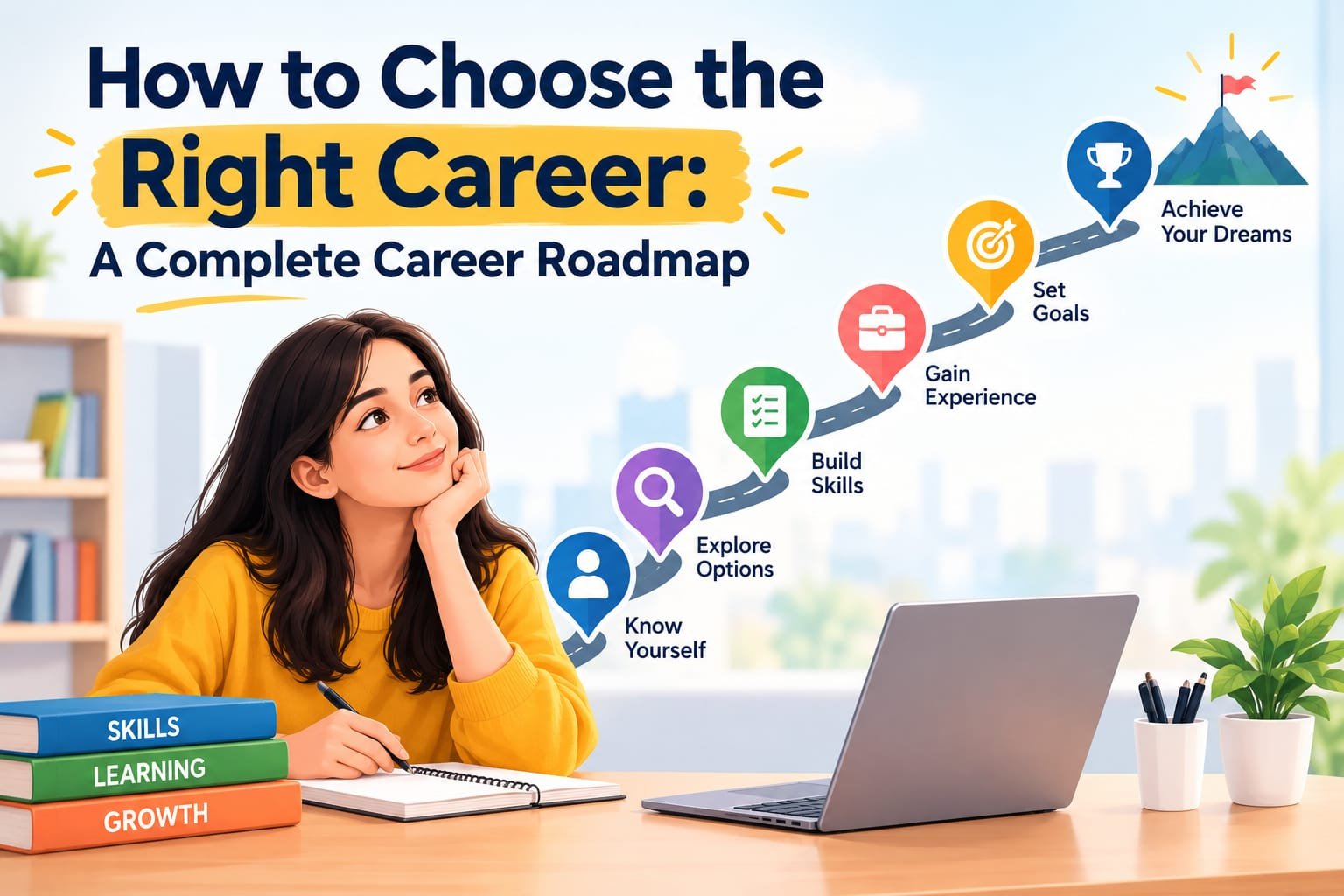
A simple career roadmap could be:
Self-assessment → Career exploration → Career selection → Skill development → Practical experience → Job search → Continuous growth
Instead of randomly selecting a course or career, this approach helps you make decisions based on your interests, abilities, goals, and available opportunities.
Step 1: Understand Yourself
Before you look out for the best career, it is important to understand yourself. It is worth asking yourself the following questions:
- What subjects or activities do you enjoy doing?
- What are you good at?
- Do you like working with people, technology, numbers, ideas, or even objects?
- What kind of work environment or set-up do you enjoy?
- What are your personal and financial goals?
- What lifestyle do you want?
Your interests, talents, personality, and values can influence your career decisions. Career exploration resources advise considering your interests and skills and work values in narrowing down your career options.
For example, one may decide to go into content writing, advertising, and media, or design, marketing, and public relations if they enjoy creativity and communicating with others. On the other hand, one may decide to pursue finance, accounting, or economics if they have an interest in numbers.
There is no best career; everyone has their unique talent, interest, and need.
Step 2: Explore Different Career Options
Having come to terms with your needs and interests, it is time to explore different career options. It is not enough to simply identify a certain field of study or work as the best; it is worth exploring the different roles that one can play within a specific industry.
As an example, one may explore the different roles in marketing, including marketing executive, brand manager, advertising manager, marketing director, and so on. One must look out for the following:
- Qualifications and skills needed
- Duties and responsibilities
- Career progression
- Work environment
- Industry attractiveness
- Career-related further studies
- Future prospects
The Government of India’s My Career Advisor initiative offers insights into a wide range of career options, spanning roles, qualifications, skills, and future prospects. Additionally, one can look out for resources such as Urbantract Education for career, training, and job-related information.
Create a Career Shortlist:
With the view to developing options, it is important to develop a shortlist of your preferred three to five careers. The following factors can be evaluated to facilitate decision-making.
| Factor | Question
|
| Interest | Do I enjoy this field?
|
| Skills | Can I learn or acquire the skills required?
|
| Education | What are the qualification requirements?
|
| Opportunity | What opportunities are available in this field?
|
| Growth | Can I grow in this field?
|
| Lifestyle | Does this career fit my lifestyle?
|
This can help in making the process of narrowing down your career options a bit easier.
Step 3: Don’t Choose a Career Based on Peer Pressure or Personal Biases
Often times, the worst career move is to base your decision on the opinions of others. Your parents may push for a particular field of study or work. Friends may insist that one follows a particular course of study simply because it is ‘in’. Social media makes it even more ‘cool’ to pursue a specific career just on account of its popularity.
While it is always a good idea to take the views of others into consideration, one must not let personal biases dictate his or her career decision. A career should ideally be a combination of your interests, skills, and opportunities.
It is always a good idea to avoid choosing a career on account of the salary it offers. Money is important, but job satisfaction, growth, and work environment matter too.
Step 4: Identify the Skills You Need
Choosing your career is just the first step; the next one is to become eligible for it. Once you have a shortlist of your preferred careers, make a list of skills required for each.
For example:
Digital Marketing: SEO, social media marketing, analytics, content marketing, advertising
Data Analytics: Excel, SQL, statistics, data visualization, analytical thinking
Software Development: Programming, problem-solving, databases, version control
Content Writing: Research, writing, SEO, editing, communication
Now, you can work on a skill development plan based on the skills required.
Using learning platforms like SWAYAM Plus, which is an initiative of the Ministry of Education, implemented by IIT Madras, you will find industry-oriented learning to help you become job-ready and career-ready.
Step 5: Gain Practical Experience
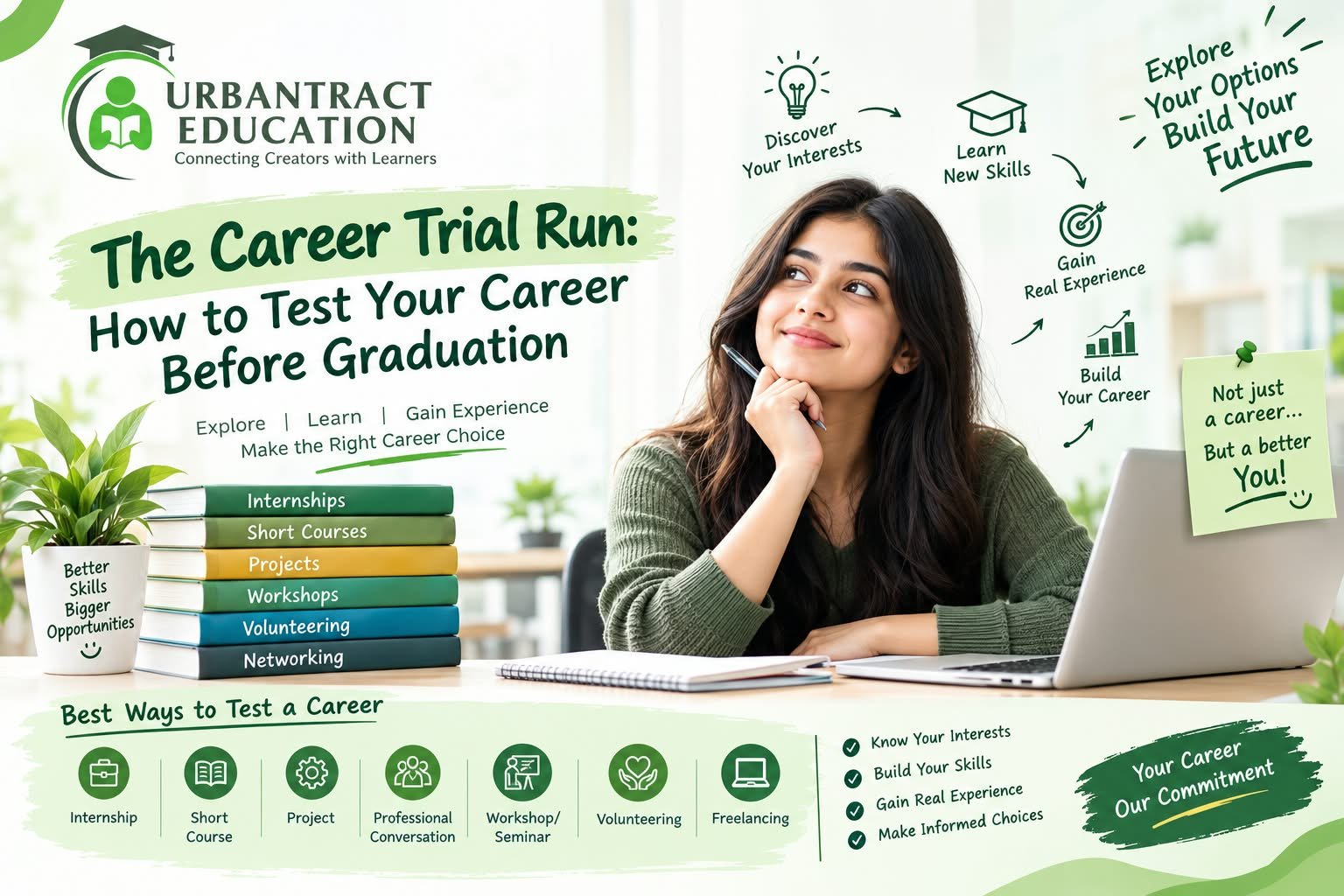
You may not always be able to fully understand a profession by simply reading about it.
Analyze the subject of interest through:
- Internships
- Projects
- Freelancing
- Volunteering
- Workshops
- Competitions
- Industry events
- Conversations with professionals
The hands-on experience you’ll get from these opportunities can help you determine if you’re actually passionate about that particular field of study.
Internships can help you understand your interests and find out which skills you need to improve before getting a job. Government educational resources also suggest that internships, projects, and workplace experience can help students understand the working environment and learn practical skills.
Step 6: Set Clear Career Goals
Once you have a career in mind, it is now time to set realistic and achievable goals.
Instead of saying:
“I want a successful career in digital marketing.”
You can say:
I will learn SEO and Google Analytics within three months, complete two practical projects, and apply for internships within six months. In relation to this, it is always a good idea to set realistic short, medium, and long-term goals. A good structure could be
Short-term goal: Learn the required fundamentals.
Medium-term goal: Complete various projects and gain practical experience.
Long-term goal: Secure a suitable job or build a successful career in the field.
Career-planning resources advise on the need to set clear career goals and the experiences and steps required to get there.
When Should You Consider Career Counselling?
Sometimes, it can prove very difficult to make a career decision on your own.
You may want to consider career counselling if:
- You are clueless about the best career options.
- You are confused between different career options.
- Your interest’s conflict with your field of study.
- You are under tremendous peer or parental pressure.
- You are unsure which course or qualification to go for.
- You want to identify your strengths and weaknesses.
- You need a well-structured career plan.
A qualified career counsellor can help you in identifying your options and making the best decision possible. Career guidance programs often rely on an assessment of interests, aptitude, and personality.
Explore Urbantract Education’s Career Counselling Services.
Your Career Doesn’t Have to Be Perfect:
One of the most common myths surrounding career planning is that you need to identify the right career path straight away.
In this case, there is no need to rush since your interests may well change over time, as well as an industry you would like to be a part of.
Also, new areas of activity, fields of expertise, or professions you have never considered may arise; perhaps, your first job may have taught you a lesson that led you to a completely different area of expertise.
The main purpose of a career road map is not to know exactly what will happen to you in the future; instead, it should help you get to a point when making the most appropriate decision in your career seems less challenging.
Therefore, it is vitally important to assess your own skills and requirements and explore your options in depth, and also gain the required experience and knowledge to meet your goals and move towards them confidently instead of staying unmotivated in one area for too long.
If you find yourself at a loss, consulting a professional consultant might actually be an alternative solution to help you determine the best possible choice to make in the future.
FAQs About Choosing the Right Career:
1. How do I choose the right career?
One should determine their interests, skills, personality, and values before identifying a certain career to pursue. It is also essential to conduct a significant amount of research on the occupation, including the necessary requirements and abilities needed to be successful.
2. What is a career roadmap?
It is a detailed guide that outlines one’s educational and professional milestones that lead to a chosen career.
3. How do I decide which career is right for me?
It is necessary to explore each suitable career option according to personal attributes such as skills, interests and environments and work settings. Moreover, assessments and professional counselling may also help recognize the most appropriate career pathway.
4. Should I decide my career based on salary?
It is essential to obtain a comprehensive understanding of a particular career before choosing it, including the benefits, tasks, interests, working conditions, and educational requirements since one’s profession should not be based solely on compensation.
5. Can I get career guidance from a professional counsellor?
Yes, one can consult a career counsellor about their interests and abilities to find the most suitable career options that match their goals and aspirations.
6. Is it ever too late to change careers?
No, because changing careers can begin at any age, and it is only necessary to acquire new skills and competencies in the selected field.
7. What should I do if I have no career goal?
Start with self-assessment. Identify your interests and strengths, explore different career fields, speak with professionals, and try short courses or practical projects before making a major decision.
Take the First Step Toward the Right Career:
Do you feel lost or apprehensive about your future career? Rest assured that taking the first step is the most challenging aspect.
Your selection of the career path should not be based on fear alone but should include knowledge, experience, skills, and expectations for the future.
If you need assistance in determining your subsequent steps, Urbantract Education can support you in acquiring relevant experience with appropriate guidance and knowledge about the selected career options.
Should you feel hesitant, confused, or fearful about your next move, the experts at Urbantract Education will help you make the right decision to set your career toward the correct direction.
Suggestions:
- [Career Counselling at Urbantract Education]
- [Digital Marketing Course]
- [Data Science + AI Course]
- [More Career Guidance Blogs]
Your Career Doesn’t Have to Be Perfect
Feeling scared or uncertain about your career is normal, so do not put your life on hold. Your best career option is the one that suits you best after identifying your needs, researching, acquiring relevant skills, and gaining experience in the field.
Use your career plan to identify your needs and interests, consider possible options, set realistic expectations, and work towards it steadily. Try as much as possible to avoid the peer pressure of setting unrealistic expectations for your future career path. Make your choice based on your talents, interests, goals, and opportunities.
Seeking career advice and guidance from a qualified career counsellor can be a good move to make when considering your best options. Your career should not be a race, so take a small step today and make your life better.
Need Help Choosing the Right Career?
Still confused about which career path is right for you? Urbantract Education can help you understand your strengths, explore suitable career options, and make a more informed career decision.
Connect with Urbantract Education today for professional career guidance and take the first step toward a more confident future.