Introduction:
College life is fun. No doubt about that. New friends, new experiences, and a taste of freedom. But somewhere between all of this, you also need to think about your future.
Thank you for reading this post, don't forget to subscribe!You attend classes, take exams and your assignments are complete. But is that enough? Most students realize later that they should have done more. They wish they had learned things that actually matter in the real world.
This blog is for those students. The ones who want to do something extra. The ones who don’t want to struggle after graduation. Let’s talk about what skills every student should learn in college. In simple words.
Why Should You Learn Skills in College?
Good marks are important. Everyone knows that. But they are not everything. When you start working, you will need to talk to people. You will need to manage your time,solve problems. You will need to handle pressure. These things are not taught in textbooks. They are learned through experience.
In a city like Agra, where competition is growing every day, having extra skills can really set you apart from others. Employers are not just looking for marks. They want people who can speak clearly, handle responsibility, and work well with others.
Your degree shows what you studied and your skills show what you can actually do. That difference matters more than you think.
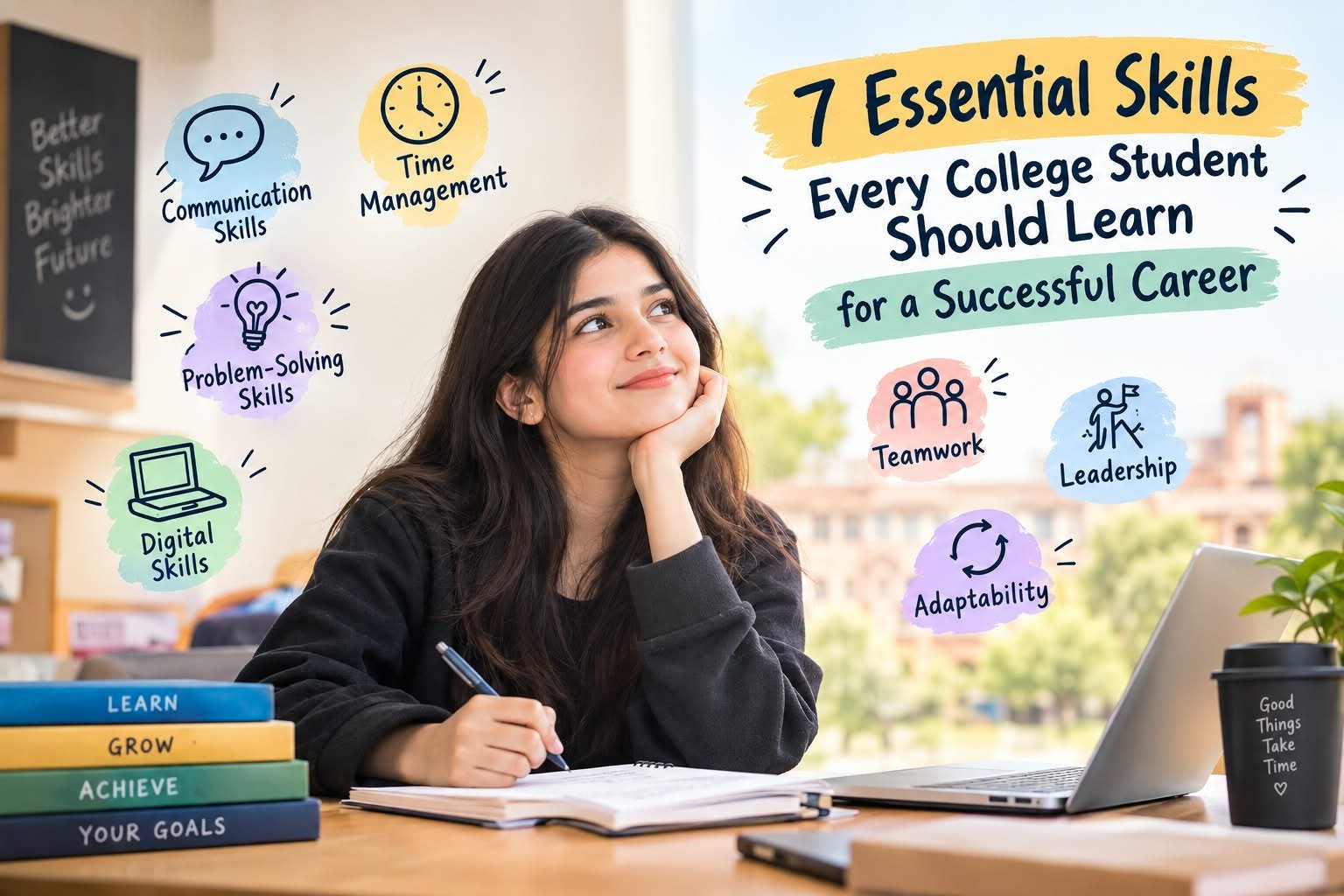
7 Skills Every College Student Should Learn:
Let’s be honest. You already know that communication and time management are important. But knowing something and actually working on it are two different things.
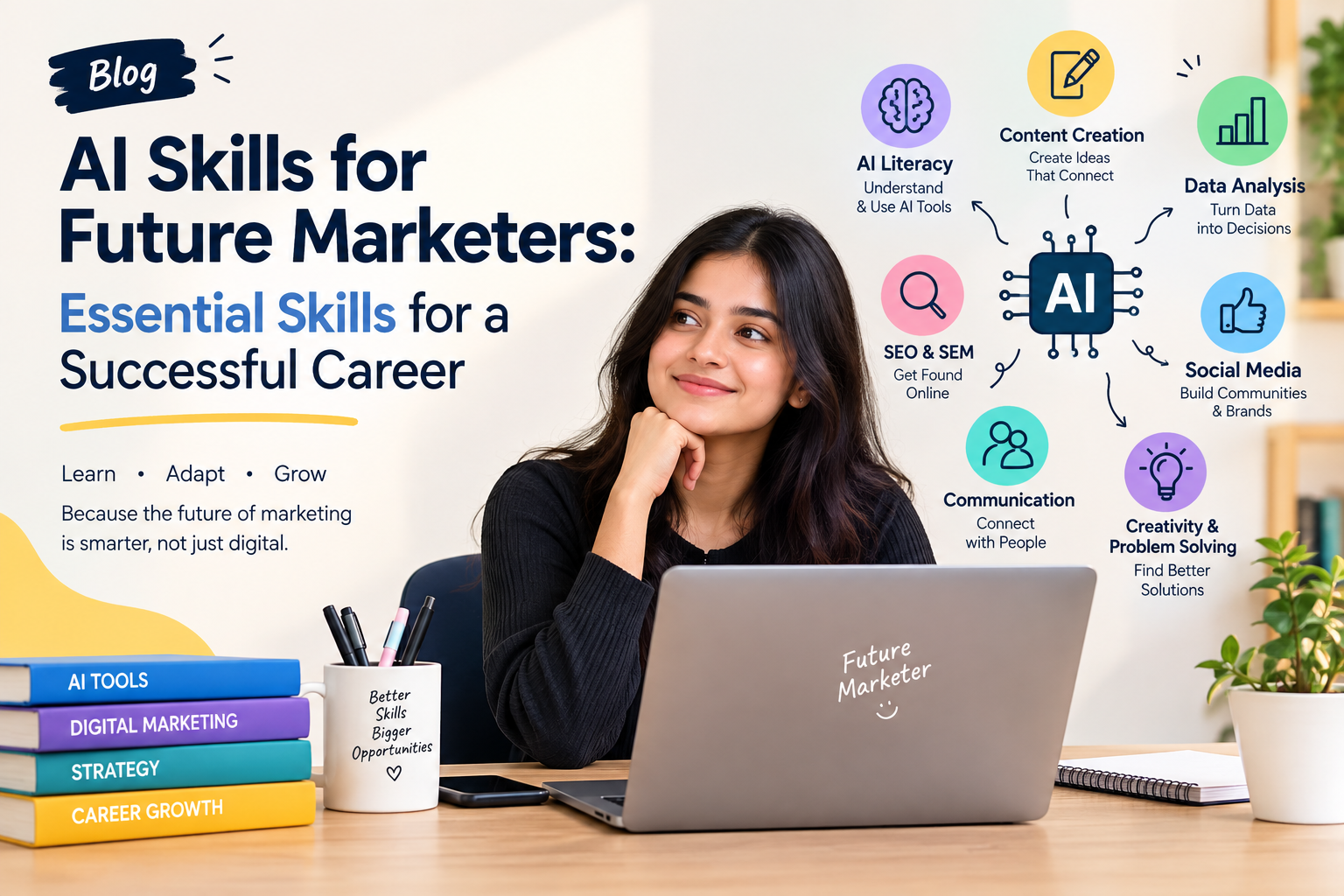
Here are seven practical skills that will help you in almost any career you choose.
1. Communication Skills
You may know a lot. But if you can’t explain your ideas clearly, it’s useless.
Communication is not just about speaking. It is about writing good emails, listening without interrupting and about presenting your thoughts in a way that makes people pay attention.
How to practice:
– Volunteer for presentations even if you feel nervous
– Join group discussions and share your views
– Write clear emails when you reach out to professors
– Practice explaining a complex topic to a friend in simple words
It gets better with time. Start small. One presentation at a time.
2. Time Management
College life is busy. Classes, assignments, projects, friends, and maybe an internship. Without planning, you will feel lost.
How to practice:
– Make a simple weekly plan
– Decide what is urgent and do that first
– Break big tasks into small steps
– Keep your phone away when you are studying
And please stop procrastinating. It never helps. The earlier you start, the less stressed you feel.
3. Problem-Solving Skills
At work, nobody will hold your hand. You will face problems and solve them yourself.
How to practice:
– When a group project goes off-track, don’t complain. Think of solutions
– Take on assignments that require independent thinking
– Always ask yourself: What is the issue? What can I do?
– Think before you act
Problem-solving is not a talent. It is a habit. And it grows stronger the more you use it.
4. Digital Skills
Every job today needs some tech knowledge. You don’t have to learn everything. Just learn what is useful for your field.
Examples:
– Finance students: Excel, basic data analysis
– Marketing students: SEO, Canva, Google Analytics
– Design students: Figma, Adobe tools
– Coding students: GitHub, debugging tools
– Everyone: Basic MS Office Skills
How to practice:
– Pick one tool related to your field
– Spend 15 minutes a day learning it
– Use it in your college projects
5. Teamwork
You will work with others in almost every job. Group projects in college teach you this.
How to practice:
– Listen to others without getting defensive
– Share the work equally
– Help your teammates when they struggle
– If something goes wrong, own it
Good teamwork is not about being friends with everyone. It is about getting things done together.
6. Leadership
You don’t need a title to be a leader. It means taking responsibility when no one else does.
How to practice:
– Lead a college event or a project
– Volunteer to help juniors who are struggling
– Be the person who suggests solutions instead of just pointing out problems
Leadership is about action, not position. Employers notice that quality very quickly.
7. Adaptability
Things are changing fast today. New tools, rules and unique ways of working. If you don’t adapt, you will be left behind.
How to practice:
– Be open to learning new things
– Take feedback positively, not personally
– When you don’t know something, say “I will learn it”
– Remember, it is okay to make mistakes. Just don’t repeat them.
This mindset will help you throughout your career.
Hard Skills vs Soft Skills – What Matters More?
Some students think only technical skills matter. That is not true. You need both.
| Hard Skills | Soft Skills |
| Coding | Communication |
| Excel | Teamwork |
| Data Analysis | Leadership |
| Design Tools | Problem-Solving |
| Digital Marketing Tools | Adaptability |
The right mix depends on your career. A coder needs logic and teamwork. A marketer needs tools and creativity. Find your balance.
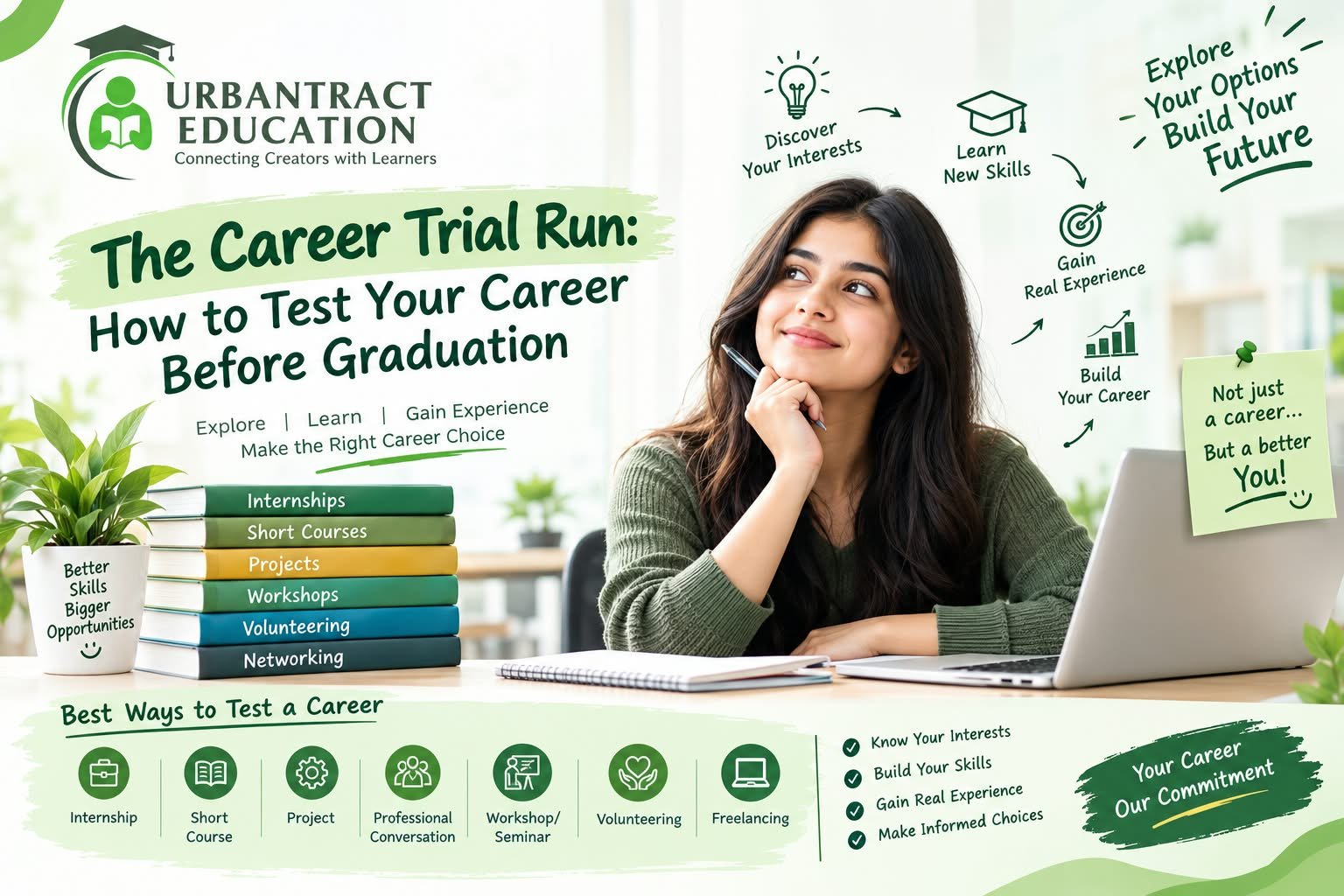
How to Prepare for Your Career:
1.Do Real Projects
Don’t just do assignments for marks. Build something you can show. A project portfolio helps a lot in interviews.
2.Try Internships
Even a short internship teaches you real work life. You learn how offices run. You learn about deadlines. How to talk to clients. This experience is gold.
3.Make a Resume Early
Start your resume in the second year. Add projects, internships, skills, and achievements. Don’t wait for placement season. By the time you graduate, you will have a strong document ready.
4.Practice Interviews
Prepare for common questions. Talk about your projects clearly. Be honest about your strengths. Confidence matters more than perfection.
These steps can help you feel more confident when you enter the professional world.
Simple College-to-Career Plan:
First year: Focus on communication and basic computer skills.
Second year: Start learning tools relevant to your field. Work on small projects.
Third year: Look for internships. Work in a team. Start building your resume and practice for interviews. Begin applying.
Mistakes to Avoid
Here are some common mistakes students make. Try to avoid them.
- Running only after marks and ignoring everything else
- Ignoring communication skills
- Collecting certificates without actual knowledge
- Not doing internships or practical projects
- Waiting for the last year to start preparing
- Never asking for feedback from teachers or seniors
- Learning skills but never applying them
Small changes now can save you from big regrets later.
Frequently Asked Questions
1. What skills are most important in college?
Ans. Communication, time management, teamwork, problem-solving, and digital skills. These will help you in almost any career.
2. Should I learn hard skills first or soft skills?
Ans. Both together. Hard skills get you the job. Soft skills help you keep it and grow.
3. Is it too late to start in the third year?
Ans. Not at all. But the sooner you start, the better. Don’t wait. Start now.
Conclusion:
College is not just about a degree. It is about becoming ready for life. If you only study and ignore everything else, you may struggle later. Build skills. Gain experience. Stay humble. Keep learning.
Your degree shows what you studied. Your skills show what you can do. Make sure both matter.
If you are a student in Agra looking to improve your practical and career-ready skills, Urbantract Education can be a useful place to explore your learning options.
Don’t wait for graduation to start preparing. Take the first step toward building skills that can help you in your career.