Thank you for reading this post, don't forget to subscribe!
e-commerce Business in India, industry is one of the fastest-growing markets in the world due to high internet connectivity, increased usage of smartphones, and the emergence of a middle-class population that has disposable incomes to make purchases through online platforms.
Whether you plan to start your own e-commerce store selling handcrafted goods, drop shipping, or building your very own D2C brand in the market, now is definitely the right time to do so. However, creating an e-commerce business in India goes beyond establishing a website.
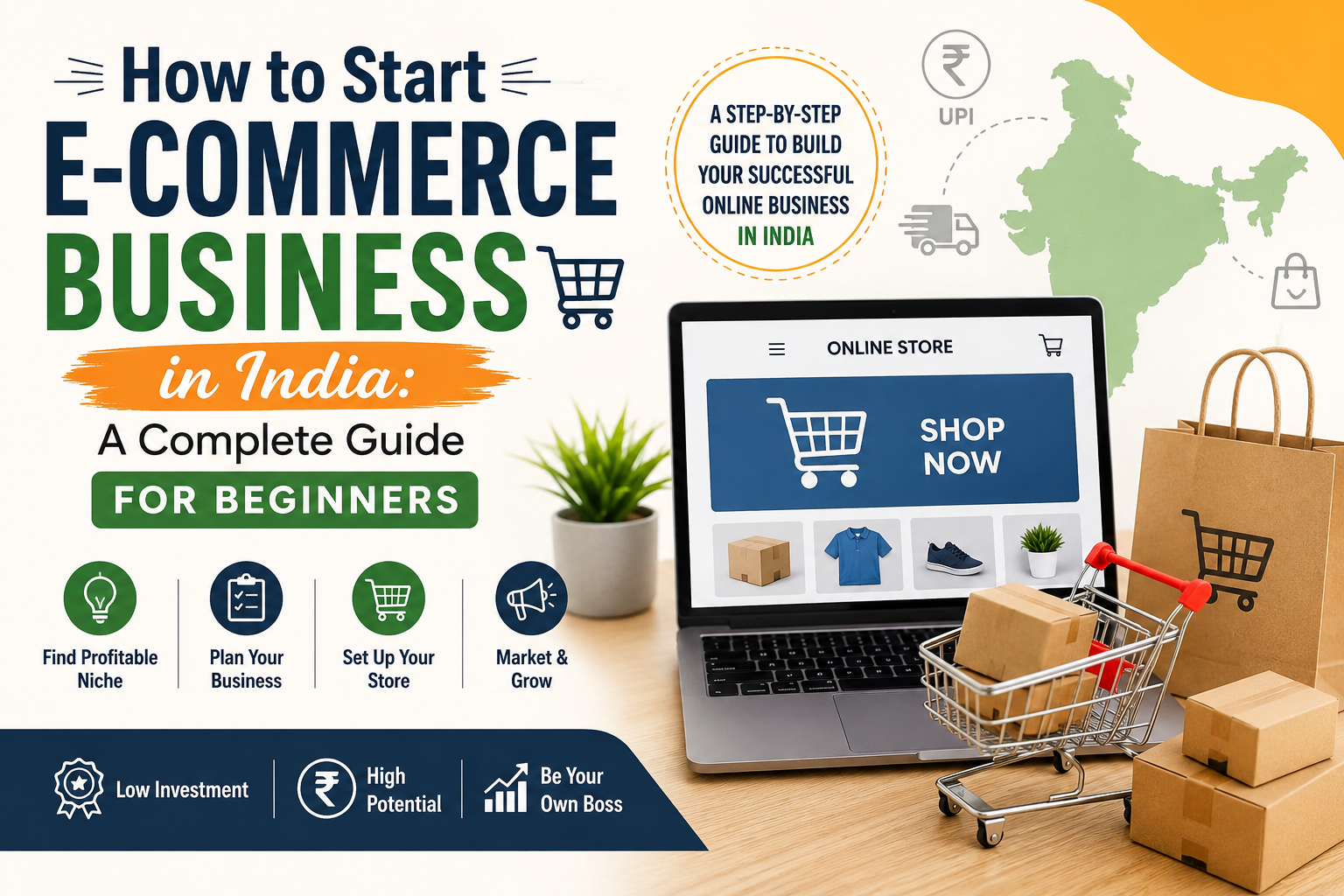
This guide walks you through everything a beginner needs to know to start an e-commerce business in India, step by step.
India’s E-commerce Market a complete guide
As always, it is best to know what you are dealing with before getting started. The market for e-commerce in India has boomed during the past decade, owing to the efforts of Amazon, Flipkart, Meesho, and a number of other players in the D2C space. Online shopping from tier 2 and tier 3 cities has become an important aspect of growth in the e-commerce industry.
The key market trends being observed include
- Mobile-first commerce: Almost all Indian online consumers search and purchase their products through smartphones.
- Cash on delivery (COD): COD payments are still preferred by most Indian consumers despite the huge growth of UPI.
- Social commerce: Social media-based selling, via Instagram, WhatsApp, and other social commerce platforms such as Meesho, is becoming very popular.
Understanding where your potential customers are and how they prefer to shop will shape almost every decision you make going forward.
Niche & Business Model Selection
Selling “everything to everyone” can be the Negative Impact for an online business, especially one looking to succeed in a sea of other big players in the market. Choose a niche that will allow you to build specialization and reputation.
Some commonly used strategies for people starting out include
- Drop shipping: Selling products without stocking any inventory, as the supplier ships the product directly to the customer.
- Print-on-demand: Specialized products such as T-shirts, mugs, and phone cases made to order based on the customers’ demands.
- Reselling: Purchasing products in large quantities (wholesale) and then selling them.
When considering your niche, some elements to look at include demand, competition, profitability, and difficulty in shipping (since fragile or large products can cost a lot to ship). Some resources that can assist you in validating your demand include Google Trends, Amazon Bestseller Lists, and social media hashtags.
Business Registration and License Acquisition
After deciding on a business structure, you will have to do some important registrations:
GST Registration
The registration for Goods and Services Tax (GST) is compulsory for almost all the e-commerce businesses in India, irrespective of their turnover, provided they are operating via marketplaces such as Amazon or Flipkart. For the listing of the products and taxation on sales, you will require GSTIN.
PAN and Bank Account
You will need to have a PAN number for your business (or you can use your personal PAN if you are running a sole proprietorship business) and an account specifically for your business operations in your bank. This is very useful for accounting, tax purposes, and future fundraising.
Udyam Registration (MSME)
It is completely free to register oneself as a Micro, Small or Medium Enterprise (MSME) through the Udyam portal and comes with perks such as easy access to business loans and reduced interest rates.
Trademark Registration
While not mandatory to start, registering your brand name and logo as a trademark protects it from being copied and strengthens your brand’s legal standing as you grow.
Other Licenses (If Required)
Depending upon what products you intend to sell, you might require some other types of licenses, such as the FSSAI license for food products or certification for cosmetics and health-related products.
Select Your Selling Platform
There are multiple ways where you can actually sell your products, and a lot of businesses have managed to thrive using combinations of these.
Marketplaces (Amazon, Flipkart, Meesho)
The best thing about marketplaces is that there is already traffic and trust attached to it, which makes them an excellent way to begin. However, the downside is that you will incur commission and lack brand control. Meesho is becoming increasingly popular due to zero commission reselling.
Your Own Website
Developing your own branded website through Shopify, WooCommerce, or Dukaan enables you to have full control over the customer experience, the pricing, and the branding.
Although the development process will involve much initial work to attract traffic, this will be worthwhile because you won’t be giving away any commission to anyone.
Social Commerce
Direct selling via Instagram Shops, Facebook Marketplace, and WhatsApp Business is becoming increasingly popular, particularly for small firms and firms that want to sell to young customers who are more inclined towards mobile devices.
In India, many successful entrepreneurs begin by selling on marketplaces to prove that there is demand and make some money initially before building their own websites.
Source Your Products
The method you use to source your products will depend on your business strategy:
- Manufacturing: Best if you want to have complete control of the product’s quality and branding, but involves more initial investments. Sites like India MART could be of help.
- Buy the products in large quantities from wholesale markets or sites and sell them at retail price.
- Sites that provide drop shipping suppliers to help with sourcing your products.
What ever route you choose, prioritize quality control. Negative reviews and returns can quickly damage a new brand’s reputation, especially on competitive marketplaces where ratings heavily influence buying decisions.
Payment and Logistics Setup
Payment Gateway
In case you have a store on your website, you will need a payment gateway such as PayU, and Cash free for making transactions through UPI, credit or debit card, net banking, and wallet methods. These platforms also support cash on delivery.
Logistics and Fulfillment
Effective logistics can be the deciding factor in determining the customer’s experience. Some options are:
- Marketplace fulfillment: Options like Fulfilled by Amazon (FBA) will provide the service of storing, packaging, and delivering orders on your behalf.
- Third-party logistics (3PL): Logistical service providers like Shiprocket, Delhivery, and Ecom Express aggregate many courier partners and give competitive rates for independent sellers.
- Self-fulfillment: Packing and fulfilling orders by yourself, which is feasible for small order volumes but becomes more difficult to scale up.
Since India has a varied geographic landscape, delivery times and costs will vary considerably for metro vs. rural areas, so keep that in mind while setting your prices and expectations.
Create Your Brand and Online Presence
Your brand is what makes you stand out from all the competition. You need to allocate enough time for:
- High-quality product photography: As you already know, professional photographs have a huge effect on conversion rates.
- Efficient product descriptions: Descriptive yet benefit-focused content that helps address customer questions before even raising them.
- Coherent visual identity: Branding elements like logo, color palette, packaging, etc.
. Plan Your Marketing Strategy
Getting your first customers requires a deliberate marketing plan. Effective channels for beginners include:
- Social media marketing: Organic posts along with paid advertisements on Instagram and Facebook.
- Collaborations with influencers: It may be more beneficial to collaborate with micro-influencers than top-tier influencers if you are a new brand looking to maximize return on investment.
- Search engine optimization (SEO): SEO product listings and website content in order to gain positions in search engines.
- Advertising in marketplaces: Advertise products on platforms such as Amazon and Flipkart to give visibility to your newly listed products.
- WhatsApp and email marketing: More cost-effective if you want to engage existing customers for their repeat purchases.
Pick just one or two mediums that you think you can do justice to initially.
Understand Taxation and Compliance
Compliance in Taxation
Operating an e-commerce store requires you to maintain certain levels of compliance:
- GST Returns: These include filing of monthly or quarterly GST returns based on your GST registration.
- TCS (Tax Collected at Source): The online marketplaces collect TCS while making payment to the seller that can be claimed as credit while filing GST return.
- Taxation of Income: This includes taxation of income based on the nature of the business – personal tax for proprietorship firms and corporate tax for companies.
- Bookkeeping: Record keeping of your sales and expenses, and inventory management with help of software such as Zoho Books and Tally.
Consider consulting a chartered accountant early on, even if your business is small — getting your compliance foundation right from the start saves considerable time and stress later.
Track the Metrics and Optimize
After getting your store up and running, it is vital to keep track of various metrics in order to be able to make decisions:
Conversion rate: The percentage of people who buy something from your site.
- Customer acquisition cost (CAC): The amount of money it takes to acquire one customer.
- Average order value (AOV): The average amount spent by customers when placing orders.
- Return and refund rates: If high, it may show problems with either the product or the description of the product.
- Repeat purchase rate: Good indication of how satisfied the customers are and their brand loyalty.
Conclusion
Launching an e-commerce business in India is now easier with the availability of digital payment options such as UPI, inexpensive logistics options, and online platforms.
Yet, in order to be successful in the long run, the right decisions need to be made, which include choosing the right niche, fulfilling legal obligations, and winning the trust of the consumers via quality products and services.
Start with modest resources, confirm your business concept by getting feedback from customers, and learn from the feedback to develop your product and services.
As you grow, plough back the revenue generated into those activities which give you the best returns. Most of the successful D2C brands in India have achieved success by taking gradual steps.